Rethinking Governance and Legitimacy in West Africa. Part 1
READING TIME: 14 Minutes
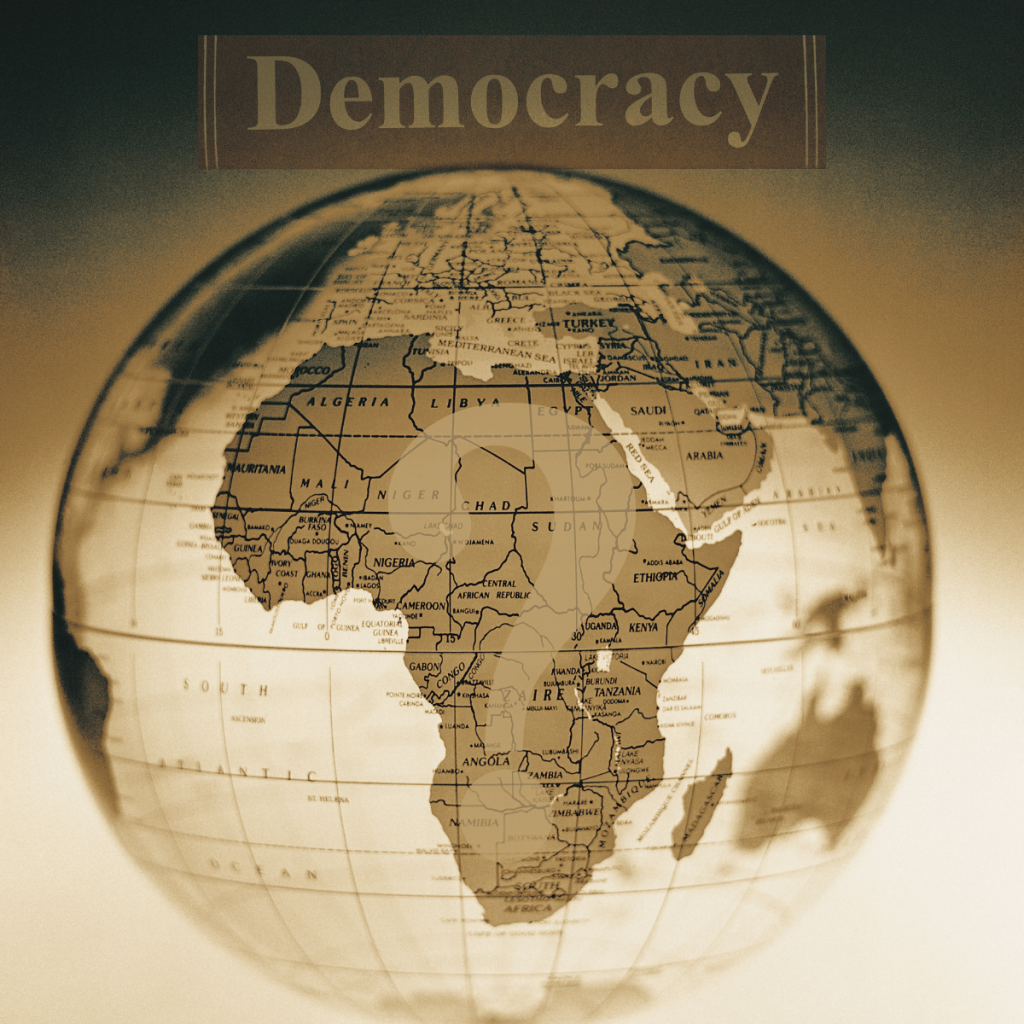
Are we a democracy?
The Western political ideology of democracy has been widely adopted as the preferred model of governance in post-colonial West Africa. However, the region’s democratic experience has been riddled with contradictions. Despite the presence of democratic institutions, West African countries continue to exhibit weak political participation, electoral manipulation, corruption, and legitimacy crises (Afrobarometer, 2025a; Transparency International, 2024). What does this contradiction mean for the consolidation, legitimacy, and the future of Western liberal democracy in the subregion? To answer requires an examination of the entent to which principles of democracy align with political realities or practices of democracy in Africa. That examination points an urgent need for contextually grounded, indigenous frameworks of governance.
Democracy is fundamentally a system of governance in which political authority derives its legitimacy from the consent of citizens. Accordingly, its imprints are popular participation, accountability, the rule of law, separation of powers, and the protection of civil liberties (Dahl, 1989; Diamond, 2008).
Democracy is rooted in the belief that citizens possess both the right and the capacity to influence the decisions that shape their collective lives. Coppedge et al. (2020) highlight five key characteristics that define a democracy: elections, civil liberties, political participation, deliberation, and equality. While these dimensions capture the normative ideals of democracy, their practical realization and application in West Africa remain uneven. The persistence of economic inequality, corruption, and limited civic engagement suggests that democracy exists in name only in much of the region.
Elections
In an ideal democracy, elections function as a core mechanism for transforming the will of the many into the authority of a few, who then govern on their behalf. In West Africa, elections are held regularly, yet many are ritualistic exercises lacking genuine participation and competition. The emphasis on these concepts is important because it highlights the different actors whose actions frame the entire electoral process.
On one side are the citizens whose participation depends on their willingness and ability to engage in the process. On the other are political contenders whose ability to compete relies on their access to an equal playing field. Compromising the freedoms of either group shifts the essence of elections from instruments of accountability to tools that reinforce existing power structures.
This aligns with Schedler’s (2006) notion of electoral authoritarianism and Levitsky and Way’s (2010) concept of competitive authoritarianism. They describe the nature of electoral competition in several West African states. Incumbent governments often use the resources and power at their disposal to silence and crush opposition, ultimately maintaining power and treating elections as a means to legitimize rather than to challenge existing authority (Human Rights Watch, 2024; Ham & Lindberg, 2015). Although Africans support elections as a democratic principle, fewer than half believe that elections in their countries translate into responsive governance (Afrobarometer, 2024). Thus, the formal existence of elections masks deeper institutional weaknesses, giving the appearance of democracy with no substance.
Effective Participation and Enlightened Understanding
According to Dahl (1989), effective participation and enlightened understanding are essential elements of a functioning democracy. This implies that elections must extend beyond the mere act of voting to ensure that citizens have genuine opportunities to engage and access accurate information. Thus, it becomes the responsibility of political authorities to foster conditions that enable broad participation and to provide information so that citizens can make informed decisions about governance. Political participation levels vary across West African countries. Empirical evidence shows that, in many cases, wealthier and more educated citizens participate less than poorer groups, such as older people and rural residents (Isaksson, 2010). This compromises the “enlightened understanding” (Dahl 1989) dimension of democracy, revealing that participation is unequal.
Scholars suggest several reasons for this discrepancy. This includes elite disengagement due to alternative avenues of influence, such as informal access to political power or the ability to shape governance through corruption (Isaksson, 2010). It could also imply an increase in voter apathy due to distrust in democratic institutions and electoral processes. At the same time, undemocratic practices such as electoral violence, clientelistic mobilisation, vote buying, and patronage, especially in rural areas, act as deterrents to electoral participation (Tambe & Monyake, 2023; Baalen, 2024; Wantchekon & Vicente, 2009).
This raises a question about functional democracy. This discrepancy in participation results from several factors. The first is that the wealthier population could not see the need to participate because of their access to political power and their ability to control governance through corruption (Isaksson, 2010) or because of prevailing undemocratic practices that undermine their voices during elections (Wantchekon & Vincente, 2009; Baalen, 2023). This has resulted in unequal participation in West African politics, forming a vicious cycle that limits broad public involvement and reinforces leadership that propagates economic inequality.
This, in turn, constrains citizens’ ability to engage in deliberative politics, independent oversight, or activism by pushing them into survival mode, which coerces them into making political choices that reflect their immediate material needs. Hence, the electoral issue in most West African states does not necessarily revolve around low voter turnout, but rather around the quality of participation: as inequality produces mediated, conditional, and often depoliticizing modes of engagement that sustain elite dominance rather than cultivate an empowered demos. Nevertheless, there has also been a notable decline in electoral participation across much of the sub-region in recent years.
For instance, voter turnout in Nigeria’s elections fell to 27.5% in 2023 from 79.52% in 1959 (The first election) (IDEA, 2024). In Togo, turnout dropped from 78.62% in 1985 to 59.25% in 2018 (IDEA, 2024). By contrast, Sierra Leone has maintained consistently high voter turnouts, recording 76.49% in 2005 and 78.13% in 2023, similarly, in Niger turnout 33.07% in 1993 to 76.96% 2020 (IDEA, 2024). However, Afrobarometer (2025b; 2025c; 2026) reports growing voter apathy and declining trust in electoral institutions across the continent.
The data reflect a fragmented pattern of uneven levels of democratic engagement across the sub-region. Indicating that effective participation has been unevenly achieved in West Africa and points to a more profound crisis of democratic legitimacy, in which citizens increasingly view elections as disconnected from meaningful governance outcomes. In other words, while elections exist, are frequent, and are formally democratic, they are, however, embedded in systems that structurally prevent them from functioning as tools of accountability.
There is equally a profound divide between the state and the citizenry, both morally and relationally. In several cases, the governing elite in West Africa appears to have objectives that differ from public expectations of their service and accountability. While this opens the conversation about corruption and impunity among the political elite, it often overlooks the underlying perception that public office is a site of private accumulation rather than collective responsibility.
Coloniality
In many ways, this can be traced to the colonial legacies. Mamdani (1996) argues that colonial bifurcated governance (indirect rule) institutionalized a divide between rulers and the ruled, a divide that African postcolonial states have largely maintained. Moreover, Ekeh’s (1975) notion of the “two publics” adds another lever. He similarly highlights the persistence of moral and civic dualities in which civic public obligations remain weak while loyalty to personal, ethnic, or elite networks is strengthened in political behaviours.
These historical legacies have evolved into a political system where power is concentrated within exclusive elite networks that are socially and morally distant from the broader population. This further fosters a governing culture in which political authority is exercised with little to no regard for public accountability, reinforces practices of elite consumption and symbolic displays of wealth that serve as indicators of status and power rather than accountability, and is accompanied by uneven service delivery (Adebanwi & Orock, 2020). These patterns have entrenched citizens’ alienation from political institutions, further weakening the democratic relationship between the state and society.
Another outcome of this governing culture is the limited inclusivity in legislative deliberations across the sub-region. In Nigeria, for example, the House of Representatives moved 39 constitutional amendment bills to second reading in a single sitting in March 2025, an episode that can be cited as evidence of rushed, low-level deliberation in law-making (Azubike, 2025; TVC, 2025). Rights groups have also documented major procurements of digital surveillance systems in Nigeria that were concluded with limited parliamentary scrutiny or public debate, raising concerns about transparency and civil liberties (Privacy International, 2014; Roberts, 2024).
Similar concerns have been raised in Sierra Leone and Senegal, with their restrictions on protest and civic spaces, drawing criticism from civic and human rights organizations (CIVICUS, 2025; HRW, 2023). Togo’s rapid 2024 constitutional reforms likewise provoked accusations of a “constitutional coup” and insufficient national consultation (Le Monde, 2024; ACSS, 2024). Even where legislation is formally debated, these examples reveal a pattern.
Critical public policies, especially those touching on security, rights, and constitutional rules, are frequently advanced without robust, inclusive deliberation. Reinforcing the state–society divide and lack of inclusivity in governance, which ought to be a core tenet of a democracy. This suggests that citizens are institutionally positioned mainly as voters, restricted to periodic electoral participation, rather than as legitimate political interlocutors in governance.
Where political authority is socially and morally insulated and distant from the broader populace, deliberation is unlikely to function as a two-way exchange between the state and citizens and instead becomes an internal elite practice. When deliberation is confined to elite spaces, decisions about rights, public resources, and other significant priorities are made without input from those most affected, thereby creating inequality as an outcome of governance.
(In)Equality
With a distant political elite, inequality becomes a means through which politics is made, and power is maintained. The dynamic of the political elite leveraging socio-economic inequality can be understood as a form of structural inequality. This is especially evident when compared to overt or coercive forms of inequality, as seen in repression, human rights violations, and coercive state power within formally civilian, democratic regimes in West Africa. The disregard for human rights in civilian-led democracies in West Africa has been a major characteristic of these regimes.
While military regimes have often been accused of impunity (Human Rights Watch, 2025), the Lekki Toll Gate Massacre in Nigeria (Bakare, 2021) illustrates how formally civilian regimes deploy coercive power against citizens they swear to protect, while shielding political decision-makers from accountability, revealing a hierarchy in whose lives and rights are treated as consequential. Similar cases have been observed across West Africa, where protests in civilian-led regimes are met with excessive force. At the same time, investigations, prosecutions, and accountability mechanisms are absent or ineffective (Amnesty International, 2024a).
In the same vein, press freedom has been suppressed in several democratic regimes, with indiscriminate arrest of journalist and gagging of news stations (Amnesty International, 2024b), revealing that governments are not open to criticism which is a core tenet of a democracy, the principle of civil liberties that guarantees the citizens freedom to speech and to hold the leaders accountable through an outlet like the press. In several instances, freedom of speech has been restricted through internet shutdowns, physical attacks, indiscriminate arrests, lethal force (Amnesty International, 2024b), and sometimes, the constitution itself has been used to criminalize protests and restrict journalists (Amnesty International, 2023).
This pattern is consistent across both civilian and military regimes and is evidence of the erosion of civil liberties in the region. The effect of this is that civil liberties ought to be at the centre of a democracy, and thus executives who act with impunity and treat the ruled as disposable deny the basic reciprocity that a democracy requires and destroy their claim to legitimacy and popular sovereignty. Other equally crucial dimensions of democracy such as gender inequality in political representation, labour market access, and asset ownership (Amnesty International, 2024b) see barriers to genuine participation and deliberation. When women are economically marginalised, politically sidelined, and socially constrained, “inclusivity” becomes tokenistic rather than substantive.
Another pattern of inequality that is built into the everyday environment and law is evident in inaccessible public spaces, weak enforcement of disability rights, and punitive laws targeting specific minorities, which in turn keep whole groups outside meaningful political participation. Thus, equality is not merely absent from West African polities; it is actively undermined, making liberal democratic practice alien to most people rather than an instrument they can claim and shape.
Equality remains one of the most contested foundations of democratic practice in West Africa, not because it is rejected in principle, but because it has not been socially internalised as a governing norm. In other words, perverse inequality in West Africa is a symptom of liberal equality being introduced as a legal form without being socially embedded through accountable state building (Ake, 1991). Pre-colonial West African societies were not organised around egalitarian individualism but around hierarchy, obligation, and spiritual and communal authority. The colonial and post-colonial transplantation of liberal equality into this context, without the sustained process of civic socialisation and institutional accountability, has resulted in equality functioning more as a formal claim than a lived political reality.
This governance structure has enabled leadership that prioritises personal and factional interests over fulfilling collective goals. This is evident in the instrumentalisation of the law, the discretionary use of executive power, and the failure to address structural inequalities. Suggesting that political inequality, as articulated in liberal democratic theory, especially Dahl’s concept of citizens as political equals with equal rights to protection, participation, and contestation, has not been internalised socially. Instead, equality in West African contexts operates within bounded normative frameworks shaped by religion, gender, ethnicity, and economic status (Clapham, 1996).
The coexistence of these contrasting understandings of equality creates conditions in which injustice can be normalised by political elites and other members of society, often without recourse to due process. Episodes such as the killing of Deborah Yakubu in Nigeria, following allegations of blasphemy, exemplify how competing moral orders can override constitutional protections when the state fails to assert the primacy of the law and equal citizenship. Such incidents are not evidence of cultural predisposition to violence, but of weak institutions, legal impunity, and the absence of a shared civic commitment to political equality under the law.
Conclusion
In conclusion, this paper compels the reader to judge for themselves: the disjuncture between the democratic experience in West Africa and the pillars of democracy (participation, deliberation, accountability, civil liberties and equality), which remain out of reach for the majority of Africans, shows pictures of democracy as performance that can be likened to a set of rituals that confer international legitimacy on governments while insulating them from accountability. This is the result of transplanting a Western liberal-democratic model into political contexts shaped by colonialism, elitism, and moral frameworks that were never reorganised around the civic reciprocity that democracy requires.
This raises a question that goes beyond this critique: if liberal democracy, as currently practised, is inadequate to the political realities of West Africa, what governance frameworks might better reflect the region’s historical, social, and moral foundations while genuinely serving its people?
AUTHOR’S BIO
Cleopatra Onuegbu is a researcher focusing on the dynamics of governance and security in West Africa and the Sahel. Her work examines the drivers of political instability and the role of non-state armed groups, with particular interest in building sustainable, locally grounded governance frameworks. Guided by a commitment to African perspectives, Cleopatra explores how indigenous knowledge can provide alternative foundations for peacebuilding. She is dedicated to producing practical research that contributes to relevant, context-driven solutions across the continent.
The views expressed in this article are those of the author and do not necessarily reflect the official position of the Centre for Alternative Politics & Security West Africa (CAPSWA).