FROM TRASH TO CLIMATE THREAT:
WHY PLASTIC WASTE MANAGEMENT MATTERS IN A WARMING WEST AFRICA

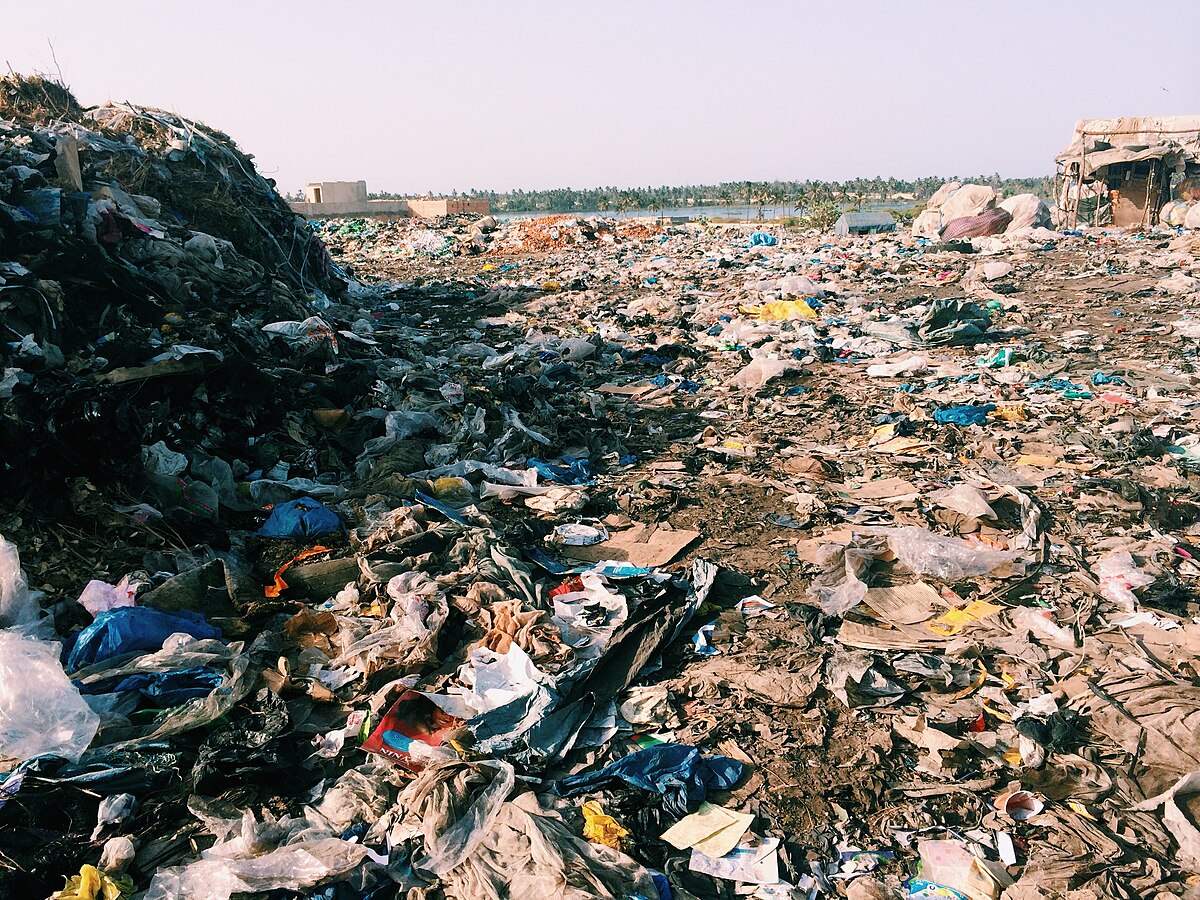
Credit: Wikimedia- Williams Omoh
Plastic waste, the by-product of global reliance on synthetic polymers, has emerged as a defining environmental challenge of the 21st century. In West Africa, where urbanization and population growth are accelerating, plastic use has skyrocketed, resulting in mounting waste management challenges. The phenomenon presents a dual reality: on one hand, plastics provide affordable packaging, storage, and economic opportunities through recycling and informal collection; on the other, mismanaged plastic waste contributes to severe environmental degradation, climate change, and public health crises.
This brief explores the multifaceted dimensions of plastic waste in West Africa, focusing on its historical evolution, socio-economic drivers, environmental and climate consequences, and governance responses. By examining both its utility and its destructive impact, this analysis underscores the urgency of effective waste management as a pillar of climate resilience in the region.
Plastic consumption in West Africa has increased exponentially in recent decades due to globalization, urbanization, and the demand for cheap, durable materials. Ghana, for instance, imports over 2.58 million metric tons of raw plastics annually, with nearly 73% ending up as waste due to low recycling capacity. Nigeria, the most populous country in Africa, generates about 42 million tonnes of solid waste annually, with plastic making up a significant share. Yet, waste collection systems are often weak, with only 20–80% of municipal waste being collected in cities, leaving the rest to accumulate in waterways, open dumps, and communities.
Today, plastic waste management in West Africa can be divided into two broad categories:
Formal Waste Management Systems: Government-led collection and disposal efforts, often constrained by funding, infrastructure, and enforcement limitations.
Informal Waste Management Systems: Community-led or private initiatives, including scavengers and recyclers, that repurpose plastic but remain limited in scale.
Causes of the Plastic Waste Crisis
The persistence and escalation of plastic pollution in West Africa are driven by several interconnected factors:
- Urbanization and Population Growth: Rapid growth in cities like Lagos and Accra has outpaced waste management infrastructure, creating uncollected waste surpluses.
- Weak Regulation and Enforcement: Policies to regulate single-use plastics exist in some countries but are poorly enforced due to institutional weaknesses.
- Economic Dependence on Plastics: Plastics remain the cheapest and most accessible material for packaging food, water, and goods, sustaining demand despite its environmental costs.
- Poverty and Informality: Many communities depend on scavenging and informal recycling as a livelihood, limiting large-scale transitions to sustainable systems.
- Foreign Imports: West Africa continues to import significant amounts of plastic products and waste, some of which are non-recyclable, worsening the crisis.
Environmental and Climate Impacts and Government Responses
Plastic waste in West Africa is more than an aesthetic problem; it is a climate and environmental threat. Open burning of plastics, a common practice in the region, releases greenhouse gases such as CO₂ and methane, alongside toxic chemicals that contribute to both climate change and public health risks. Blocked drains caused by plastic waste exacerbate urban flooding, destroying homes and livelihoods during heavy rains. Ecosystems are also under threat as plastics infiltrate rivers, farmlands, and coastal areas, leading to biodiversity loss and contaminated food chains.
Governments in West Africa have responded with varying degrees of urgency. Ghana has experimented with the Community Plastic Waste Recycling Initiative, while Nigeria has promoted recycling startups and waste-to-energy projects. Regional bodies have also encouraged bans or restrictions on single-use plastics, but enforcement remains weak. While innovative private sector efforts, such as Nelplast Ghana’s plastic-to-pavement block technology and Trashy Bags’ recycling of sachets into useful products, offer hope, these remain isolated cases rather than systemic solutions.
Experts argue that this challenge also represents a missed economic opportunity. If effectively managed, West Africa’s plastic waste could fuel new industries by transforming discarded plastics into raw materials, creating jobs while reducing pollution and reliance on imports (The Conversation, 2023). Similarly, grassroots initiatives such as Ghana’s Plastic-Free School pilot show how education can empower young people to reduce plastic consumption and tackle microplastics, demonstrating that behavioural change and awareness are critical to complementing broader policies (GhanaWeb, 2025)
Challenges persist, including limited financial resources, corruption, lack of consistent policy enforcement, and insufficient public awareness. The gap between policy ambition and implementation undermines progress toward sustainable waste management.
Recommendations
Addressing the plastic waste crisis in West Africa requires a strategic, multi-pronged approach:
- Formalization and Regulation: Strengthen policies on plastic use, with stricter enforcement of bans on single-use plastics and incentives for sustainable packaging alternatives.
- Circular Economy Development: Promote large-scale recycling industries and innovative reuse projects to transform plastic waste into economic assets.
- Public Education and Awareness: Launch nationwide campaigns to change consumption habits and encourage proper disposal practices, drawing inspiration from school-based initiatives like the Plastic-Free School program.
- Alternative Livelihoods: Support vulnerable groups in the informal waste sector with training and opportunities in green jobs, agriculture, and sustainable enterprises.
- Regional Collaboration: Foster cross-border cooperation to regulate plastic imports, share technology, and harmonize waste management policies.
- Investment in Infrastructure: Governments and private partners must invest in modern waste collection, recycling, and waste-to-energy systems to handle the growing volumes of plastic.
Plastic waste in West Africa symbolizes both a resource and a climate threat. While plastics provide economic benefits and livelihood opportunities, their mismanagement undermines climate resilience, public health, and sustainable development. Open burning of plastics, clogged drainage systems, and biodiversity loss illustrate how unmanaged waste amplifies the risks of a warming world. Despite government interventions and innovative private initiatives, weak enforcement and inadequate infrastructure continue to hinder progress.
In conclusion, a sustainable solution requires coordinated efforts across government, civil society, private industry, and communities. By embracing circular economy models, strengthening regulation, and investing in alternative livelihoods, West Africa can transform plastic waste management from a climate threat into a driver of resilience and green growth. Plastic waste management, therefore, is not a peripheral issue but a cornerstone of climate adaptation and sustainable development in the region.
Ms. Gloria Ama Kabuo Tetteh is a volunteer for the Security and Environment Department at the Centre for Alternative Politics and Security- West Africa (CAPS-WA). She is also a desk researcher at Faculty of Academic Affairs and Research (FAAR) at the Kofi Annan Peacekeeping Training Centre (KAIPTC). Has a master’s degree in Political Science and History from the University of Ghana. Her research interests are in Peacebuilding, Security, Climate Change, Conflict Resolution, and Gender issues.